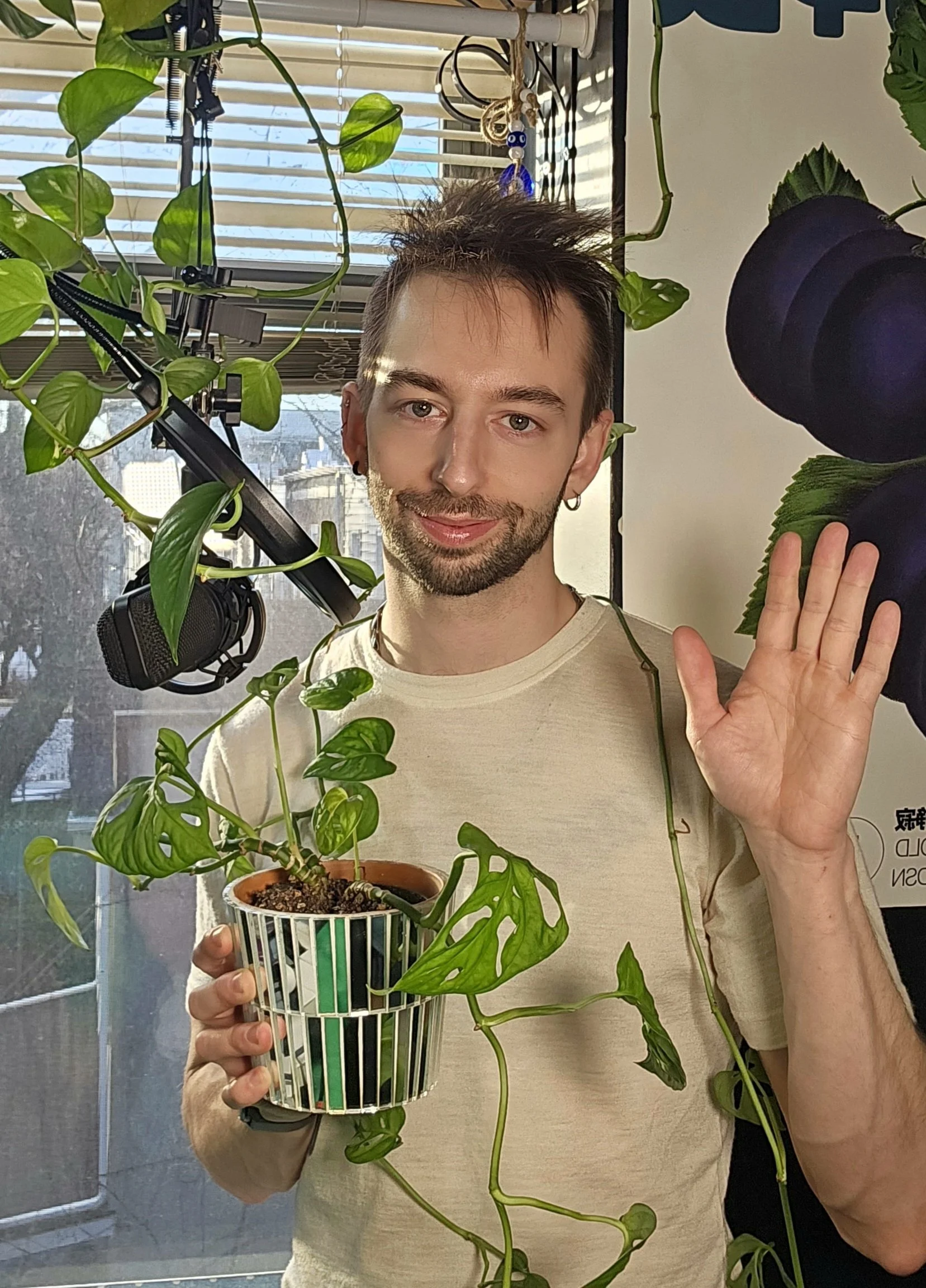
Hi, I’m Kris.
I help songwriters, producers, pianists, and creative musicians build real keyboard fluency through the music they actually care about.
That can mean learning richer chords, adding more movement to your progressions, understanding the harmony behind songs you love, shaping arrangements with more intention, or finally feeling like the keyboard responds to what you hear in your head.
My work lives somewhere between piano lessons, harmony coaching, songwriting support, and creative mentorship.
The goal is to understand what you’re hearing, get it under your hands, and use it to make music that feels more like you.
I could play, but I couldn’t really create yet
I grew up playing classical piano. A lot of it.
I built stamina. My fingers could handle complex shapes. I could sit with difficult music and brute-force my way through it. But no one really put names to the shapes for me. No one showed me how chords worked, how rhythm worked, or how to use the instrument to make something of my own.
For years, the message was basically: here is the sheet music, now play.
I got technically good, but that didn’t translate into being able to sit down and make music. Songwriting was mysterious. Rhythm and harmony felt unintuitive. I could read complicated things from the page, but if you asked me to jam, write, accompany someone, or build a song from scratch, I had no idea what to do.
I felt like a keyboardist, not a musician or creator.
There was one moment at the end of high school that made the whole thing painfully clear.
A classmate of mine, already a prolific producer, heard me practicing Chopin in the music rooms and invited me over to jam. I showed up at his house with a stack of sheet music of compositions he didn’t know.
He was expecting us to just jam, to simply play.
I didn’t know how to do that.
He was kind about it. We played pool instead. But I remember leaving with this awful feeling that I had spent years at the piano and somehow missed the part where music becomes a living language.
I just needed someone to show me what music was actually made of.
Then the instrument opened up
That started happening when I got deeper into theory and composition.
Suddenly, chords were not just symbols. They were shapes, colors, movements, tensions, releases. I already had technique in my hands. Now I had a way to understand what I was hearing and make choices with it.
For the first time, playing the keys felt like an extension of myself. For the first time, I could sit down without sheet music and actually go somewhere.
From there, my musical life got wider and weirder in the best way. I played in bands, improvised for hours, started learning production, recorded for friends, and fell in love with listening as its own kind of study. I would jam with friends one day, then hermit away the next, layering sounds and getting lost in the process. I took voice lessons. I studied jazz piano. I played cocktail piano gigs. I wrote songs and made beats. I kept trying to understand how sound becomes feeling.
Each phase gave me something I had been missing.
Technique gave me facility. Theory gave me a map. Bands gave me connection. Production gave me a place to explore. Jazz gave me movement. Songwriting gave me humility.
Teaching made me figure out how to pass it on.
The thing I kept noticing
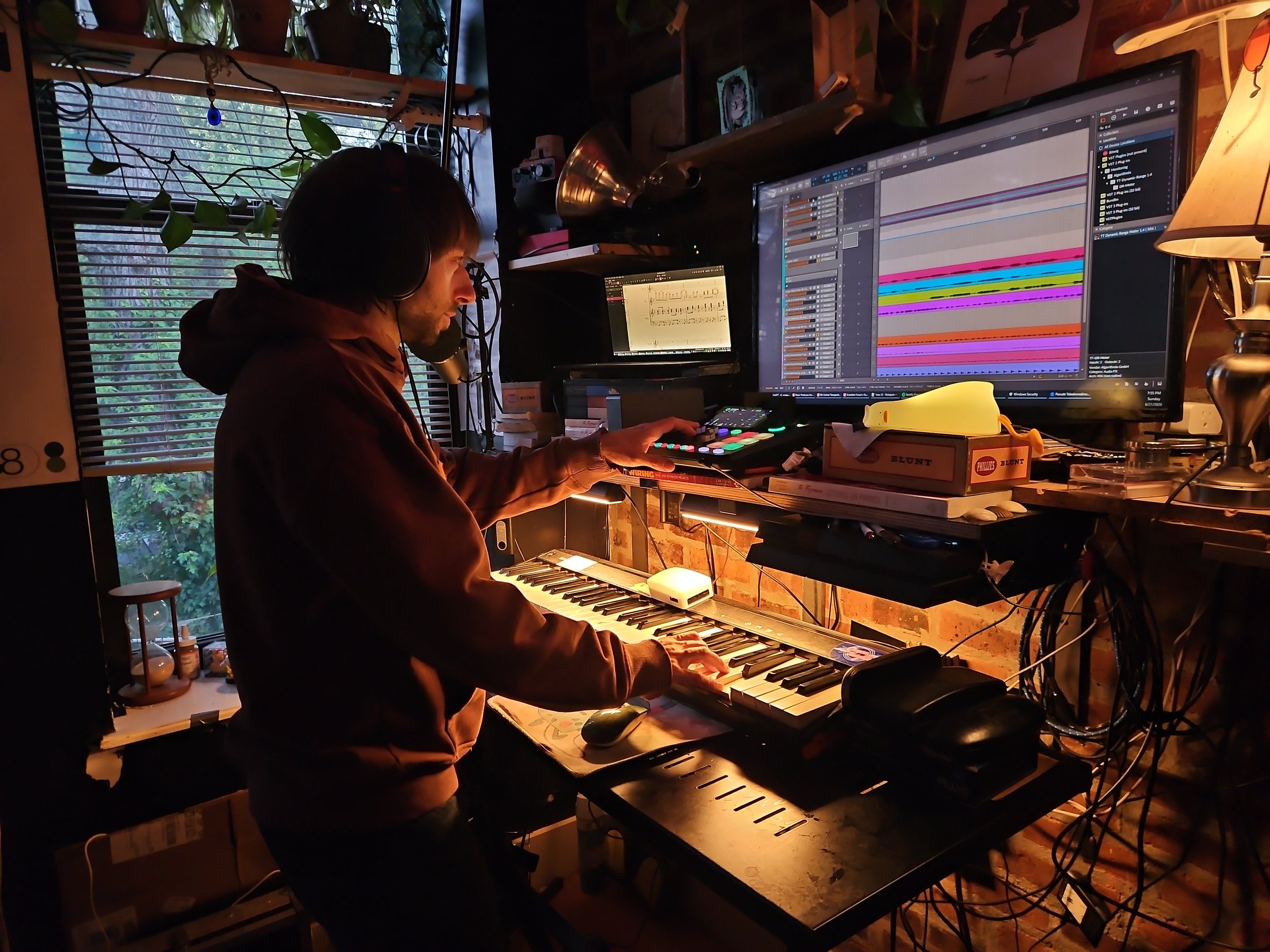
A lot of musicians carry some version of the same frustration I had: there is music in their head, or in their hands, or in their taste, but the instrument doesn’t fully connect to it yet.
Maybe you can play, but you don’t know how to make the instrument feel like yours yet.
Maybe you produce, but the keyboard still feels clumsy or limited.
That is the gap I care about.
Take the sounds you already care about. Figure out what’s happening inside them. Get those movements under your hands. Then build a practical path from where you are to the music you’re trying to make.
Learning to create without waiting for the muse
I used to need to be in “the zone” to make music. And when life drains your time, attention, and energy, the zone can start to feel like a scarce resource.
For a while, music only felt possible when I was inspired enough to throw myself into the process despite not really knowing what I was doing. A song would happen when some perfect emotional wave showed up and carried me through it.
What I didn’t understand yet was that music making is equal parts inspiration and craft.
Craft is something we can practice. Craft can get us into flow. Craft gives us more chances to have ideas. Craft helps fuel the very inspiration we’re looking for.
It’s a big part of how I teach.
We build the skills that make inspiration easier to cultivate and easier to catch when it arrives: better ears, better voicings, better rhythm, better harmonic instincts, and better ways to develop an idea instead of abandoning it.
We work on becoming the kind of musicians who can sit down, explore, make choices, finish things, and surprise ourselves.